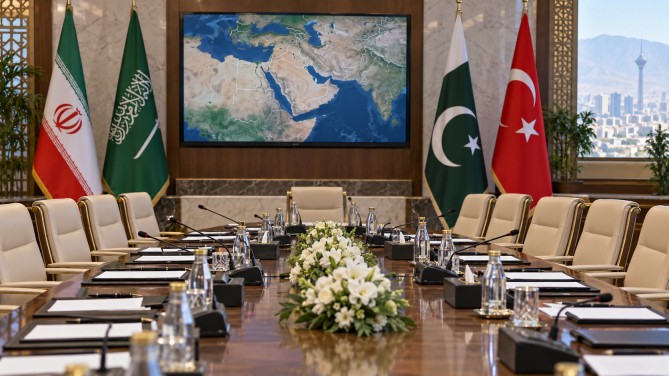
Iran is poised to host pivotal regional security talks in Tehran, bringing together senior officials from Saudi Arabia, Pakistan, and Turkey. This diplomatic initiative aims to mitigate escalating tensions in the Middle East. Participants include Saudi Defence Minister Khalid bin Salman, Pakistan’s army chief General Asim Munir, and Turkish intelligence chief Ibrahim Kalin, alongside Iranian security representatives.
The discussions will focus on regional stability, de-escalation, and pursuing diplomatic solutions to the ongoing crisis. Saudi officials have indicated that this meeting is part of broader efforts to enhance dialogue among nations impacted by regional conflicts. Additionally, the talks are intended to bolster mediation efforts led by Qatar and Pakistan.
This diplomatic engagement occurs against a backdrop of continued tensions involving Iran, the United States, and Israel, as well as security concerns over the strategically crucial Strait of Hormuz. This waterway is vital for global oil and liquefied natural gas shipments, and disputes over its control have heightened worries about energy security and international trade.
Regional conflict has also been exacerbated by ongoing hostilities in Yemen, where the Iran-backed Houthi movement persists in attacking Saudi Arabia. In response, the Saudi-led coalition has targeted Houthi missile sites and infrastructure to diminish the group’s military threat. Recent attacks claimed by the Houthis on Riyadh’s international airport and oil facilities further underscore the fragile security situation.
Amid these developments, Saudi Arabia has sought to bolster its defenses, securing an agreement with Greece to maintain the deployment of the Patriot missile defense system in the kingdom. This move underscores Saudi Arabia’s focus on enhancing its air defense capabilities in light of ongoing threats.
The upcoming Tehran talks present a crucial opportunity for regional powers to discuss conflict containment, enhance security cooperation, and explore potential avenues to avert further escalation. However, the success of these discussions will depend on the ability of the involved parties to reach diplomatic consensus and implement effective measures to address the region’s enduring disputes.