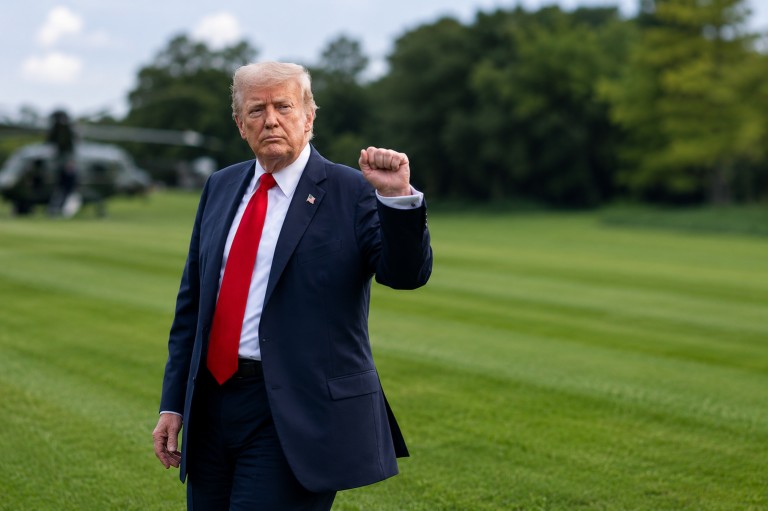
In a surprising move, former U.S. President Donald Trump announced plans to deploy an additional 5,000 American troops to Poland, raising eyebrows among NATO allies and U.S. defense officials. This announcement came on the heels of a prior decision to reduce U.S. military presence in Europe by roughly 5,000 troops, including the cessation of personnel rotations from Germany to Poland. The abrupt change left many questioning the United States’ long-term strategy in the region.
The initial plan to decrease troop numbers had already stirred concern among NATO countries about America’s commitment to European security, especially amid ongoing tensions with Russia due to the conflict in Ukraine. However, Trump’s subsequent reversal, which he attributed to strong relations with Polish President Karol Nawrocki, caught many off guard and led to confusion as military plans had begun to adjust to the earlier withdrawal directive.
This uncertainty has prompted European leaders to remain vigilant regarding future U.S. military deployments. As NATO members closely watch Washington’s evolving stance, the implications for the alliance’s strategic posture in Europe remain unclear. Currently, there are about 80,000 U.S. troops stationed throughout Europe, a figure that could potentially be impacted by future decisions.
U.S. Secretary of State Marco Rubio commented on the situation, suggesting that while allies are aware of America’s ongoing review of its global military presence, troop levels in Europe might still see a reduction over time. This sentiment underscores the fluid nature of U.S. military strategy as it adapts to shifting geopolitical pressures.
In the context of these developments, NATO Secretary-General Mark Rutte has stressed the importance of European nations bolstering their own security capabilities. While U.S. support remains crucial, he emphasizes that European countries must ensure their defense readiness along NATO’s eastern flank, in tandem with American forces, to address the persistent security challenges in the region.