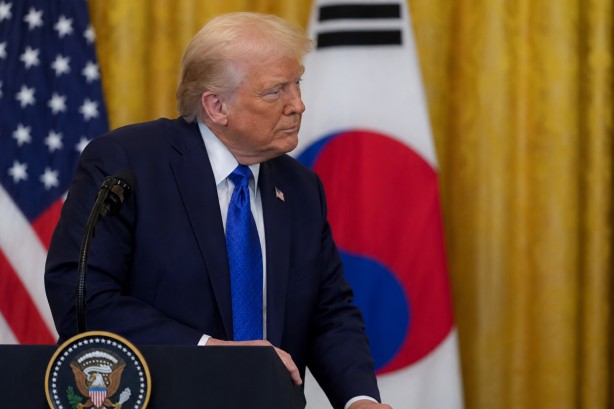
In a move that could reshape the future of the US Navy’s fleet, President Donald Trump has suggested that South Korean shipbuilders might play a pivotal role in the modernization and expansion of the naval forces. During his address at the Pennsylvania Defense and Innovation Summit, Trump underscored the necessity of rejuvenating the nation’s aging naval assets, hinting at the prospect of acquiring ships constructed outside the United States. He noted ongoing considerations for enhanced collaboration with South Korean firms and other international partners.
Highlighting the deepening defense ties between the United States and South Korea, Trump announced plans to construct two National Security Multi-Mission Vessels at Hanwha Philly Shipyard in Philadelphia. This project is projected to be worth around $1.5 billion. The dialogue between the two nations extends beyond recent summits, as South Korean President Lee Jae Myung disclosed that Trump inquired about South Korea’s capacity to rapidly build 10 US naval ships, a topic further explored in recent international discussions.
The Pentagon and the US Navy have reached out to prominent South Korean shipbuilders, such as HD Hyundai Heavy Industries and Hanwha Ocean, to gauge their expertise in designing and constructing combat ships. Hanwha, in particular, stands to gain from these cooperative efforts, having acquired shipyard facilities in Philadelphia in 2024 and pursuing licenses to construct military vessels within the US. Simultaneously, HD Hyundai and Samsung Heavy Industries have been forging alliances with American firms to make inroads into the US naval shipbuilding sector.
However, despite the promising outlook for international collaboration, significant legislative hurdles remain. Current US regulations impose restrictions on the construction of Navy ships outside the country. This means that any attempt to produce naval vessels overseas would necessitate changes in legislation or the granting of special exemptions to proceed.