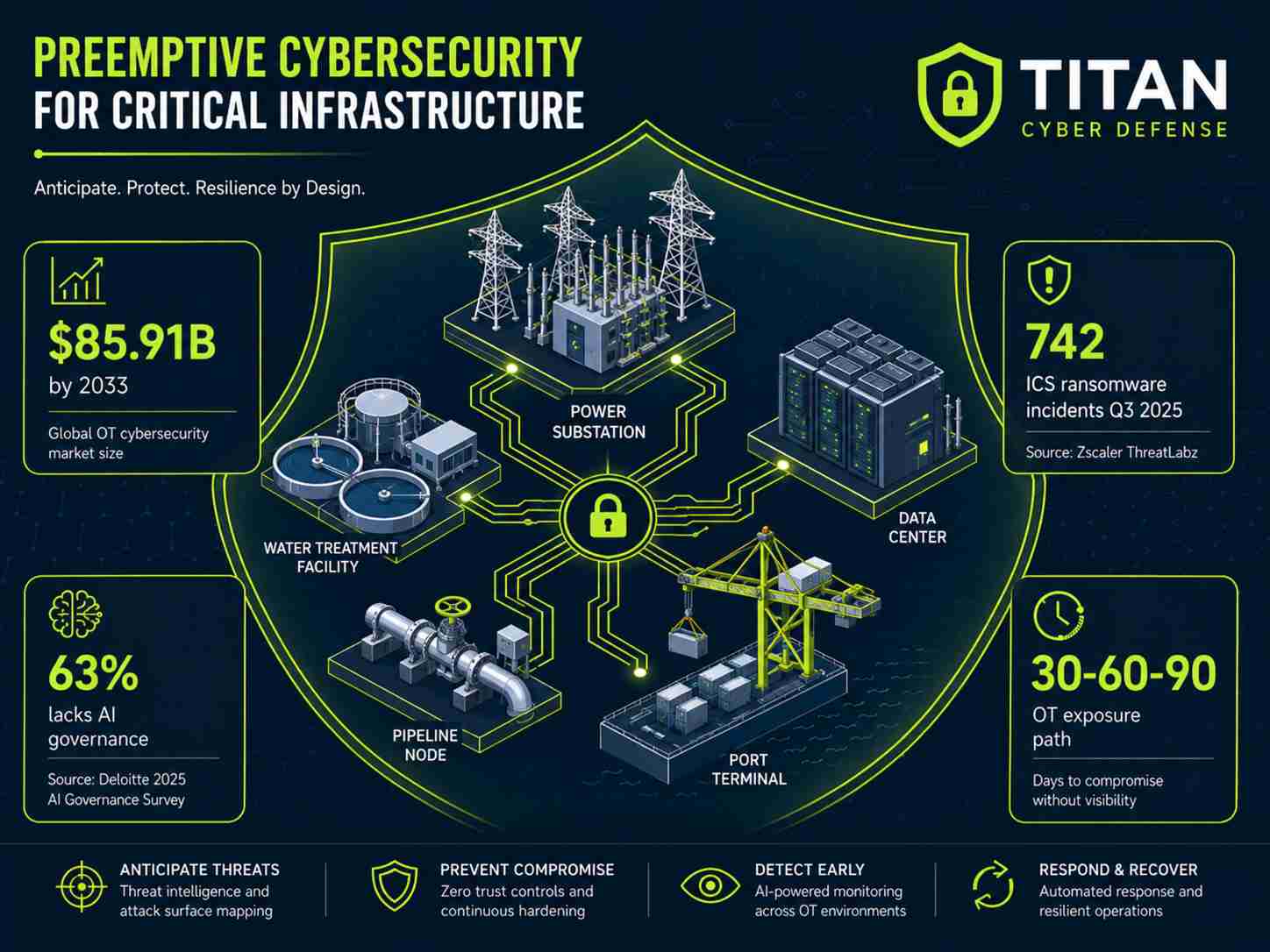
As ransomware incidents reported to the FBI exceed 3,600 in a year, with state-linked actors infiltrating utility networks and AI-supported phishing dominating social engineering tactics globally, BG Titan Group has published its 2026 Preemptive Cyber Defense for Critical Infrastructure report. This strategic 31-page document argues for a paradigm shift in cybersecurity strategies within sectors like power, water, and telecommunications, from reactive measures to proactive denial-of-opportunity approaches.
The report’s central assertion is that most operators of critical infrastructure still treat cybersecurity as an IT afterthought, often implementing it only after construction, procurement, or even after a breach has occurred. The report emphasizes the necessity for cybersecurity to be integrated into the infrastructure from the start, ensuring systems are robust, resilient, and capable of recovery while being AI-aware and secure under stress. This shift is underscored by projections from Grand View Research, which estimates that the global cybersecurity market for critical infrastructure protection will grow from USD 56.52 billion in 2025 to USD 85.91 billion by 2033, driven by factors like digitalization and enhanced interconnectivity.
The BG Titan report identifies four major forces reshaping the cyber threat landscape. These include the erosion of previously secure perimeters due to increased connectivity, the growing impact of AI on cyber intrusion operations, regulatory pressures from the EU Cyber Resilience Act and NIS2 Directive, and the convergence of IT and OT systems that amplifies the risk of cascading failures across sectors. These challenges necessitate a move from traditional cybersecurity measures to more comprehensive resilience strategies that incorporate design-level security considerations.
To address these evolving threats, the report outlines twelve areas where shifting focus from reaction to opportunity denial can add value. These include enhancing project delivery with cyber-resilient engineering, securing remote operations, and implementing AI threat readiness measures. Additionally, a 30-60-90-day plan is recommended for reducing OT exposure, beginning with identifying vulnerabilities and progressing to securing access and validating system defenses. The report concludes with ten critical questions that boards and operators should be able to answer, focusing on operational readiness, vendor access, and resilience demonstration capabilities.
BG Titan underscores the urgency of these measures as regulatory timelines accelerate and market expectations for cybersecurity diligence tighten. The report warns that organizations must choose between developing resilience by design or remaining vulnerable by default, with significant implications for uptime, safety, capital, and public trust. As the cyber landscape evolves, those who prioritize and implement these strategic shifts will safeguard their operations and reputations against emerging threats.