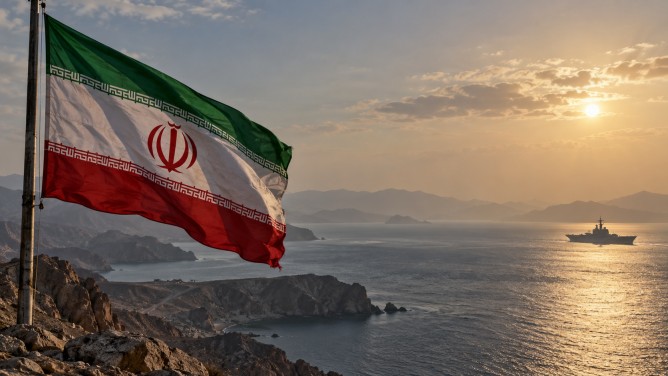
Iran has issued a warning that any new conflict with the United States could extend beyond the duration of past confrontations, following U.S. President Donald Trump’s suggestion of potential further military strikes against Iranian targets. This development takes place amid uncertainty surrounding diplomatic efforts to resolve ongoing tensions in the Middle East.
Mohammad Akraminia, a spokesperson for the Iranian army, stated that a potential future war could be more prolonged, emphasizing that the U.S. president would not be capable of dictating its duration or the conditions for its conclusion. This statement follows Trump’s comments about the possibility of targeting one or two remaining sites in Iran, specifically mentioning Pickaxe Mountain, which is suspected to house an underground nuclear facility.
President Trump has confirmed discussions with Israeli Prime Minister Benjamin Netanyahu regarding Iran, focusing on the possibility of resuming military actions and ongoing diplomatic negotiations. Reports suggest that Israel is advocating for renewed strikes after the U.S. midterm elections on November 3, while the U.S. is weighing whether to allow more time for diplomatic solutions.
Iranian military officials, including Islamic Revolutionary Guard Corps spokesperson Hossein Mohebbi, have strongly cautioned against further U.S. attacks, indicating that any conflict could have far-reaching geographical implications. Concurrently, Iranian Foreign Minister Abbas Araghchi has urged the U.S. to continue pursuing diplomacy, though he affirmed Iran’s readiness for both defense and negotiations.
Iran’s security chief, Mohsen Rezaei, disclosed that he had received a communication from U.S. Vice President JD Vance seeking to revive diplomatic discussions. Although Rezaei acknowledged a positive shift in Washington’s stance, Tehran has not yet responded. Iran has set forth several conditions for restarting negotiations, including the release of frozen assets, lifting of the U.S. naval blockade on Iranian ports, removal of sanctions, and a comprehensive cessation of regional hostilities.
The Strait of Hormuz remains a critical flashpoint, as Iran continues to impose restrictions on shipping through this vital corridor for global oil and gas supplies, while the U.S. maintains its naval blockade of Iranian ports. In this context, the United Arab Emirates has expressed hope for a diplomatic resolution but warned of the necessity to prepare for potential escalation. UAE diplomatic adviser Anwar Gargash stated that another round of fighting would not be in the interests of regional countries.
With military threats persisting alongside diplomatic engagements, uncertainty looms over whether Washington and Tehran can reach an agreement or if the region faces another phase of military confrontation.