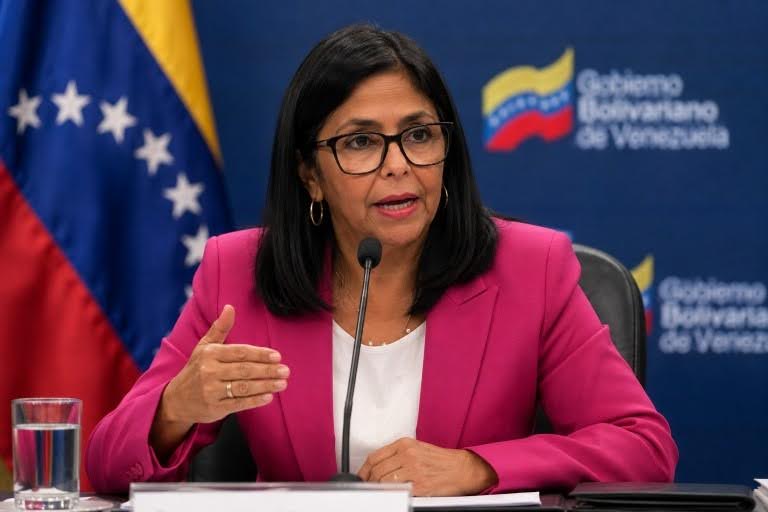
Delcy Rodríguez, Venezuela’s interim president, is staunchly defending an energy agreement with the United States amidst growing domestic criticism. The deal, which has sparked controversy due to its implications for national sovereignty, was negotiated in secret and would grant the US significant control over Venezuela’s oil reserves. Despite accusations of surrendering national resources, Rodríguez maintains that the agreement preserves the country’s ownership and sovereignty over its vast oil deposits. She highlights the potential economic benefits, projecting over $209 billion in revenue and a transformation of Venezuela into a leading energy producer.
Venezuela’s crude reserves, surpassing those of Saudi Arabia and Iran, are the largest proven in the world. The agreement reportedly involves 17 strategic oilfields with a production target of more than 1.5 million barrels per day. Rodríguez argues that without necessary investment, technology, and infrastructure, these reserves cannot be effectively utilized for economic development. Her address aimed to reassure the nation that the deal would bring substantial benefits to Venezuelan citizens by converting dormant resources into tangible economic growth.
The announcement has ignited backlash from various quarters, including opposition leaders and members of Rodríguez’s political faction. Critics have denounced the deal as a resource grab, with a former state oil executive labeling it a betrayal of national sovereignty. They point out that no similar transfer of reserves has ever occurred in Venezuela’s history. In Caracas, protesters took to the streets, expressing their discontent over what they perceive as foreign encroachment, while social media users mocked the agreement by suggesting a rebranding of the state oil company.
This development marks a significant departure for Rodríguez and her political movement, which has traditionally opposed foreign control of Venezuela’s natural resources. Previously, Rodríguez herself has spoken against such arrangements. The opposition is also voicing concern over the impact on efforts to restore democratic elections in Venezuela. They argue that true economic progress depends on transparent governance and free elections, warning that without these, the agreement may rest on an unstable foundation.