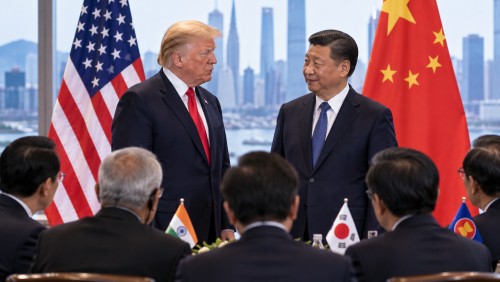
The upcoming meeting between U.S. President Donald Trump and Chinese President Xi Jinping is drawing significant attention from U.S. allies in Asia, who are concerned about potential shifts in policy regarding Taiwan. As trade and economic issues dominate the agenda, Taiwan remains a sensitive topic due to its implications for regional security.
Taiwanese officials are particularly apprehensive that discussions might include Taiwan, with President Xi expected to broach the subject. The U.S. has historically maintained an unofficial relationship with Taiwan, supporting its defense while acknowledging Beijing’s claim over the island. However, President Trump has yet to make any explicit commitments about U.S. defense support in the event of a Chinese military action.
Japan shares these concerns, emphasizing the importance of consistent U.S. rhetoric on Taiwan to avoid escalating tensions in the region. Japanese officials have proactively sought dialogue with Trump to ensure that Japan’s position is considered before the summit.
A focal point of these discussions is the U.S. arms sales to Taiwan, which China staunchly opposes. President Trump has previously indicated that a proposed arms package for Taiwan could serve as a bargaining chip in negotiations with China, though this package remains unapproved. Beijing continues to press Washington to consider its stance on Taiwan-related issues.
While the Trump-Xi meeting is primarily expected to address U.S.-China economic relations, the broader geopolitical implications of Taiwan’s status are a critical concern for Washington’s Asian allies. Taiwan’s strategic importance, particularly in global semiconductor supply chains, underscores the potential impact of any policy changes discussed during the summit.