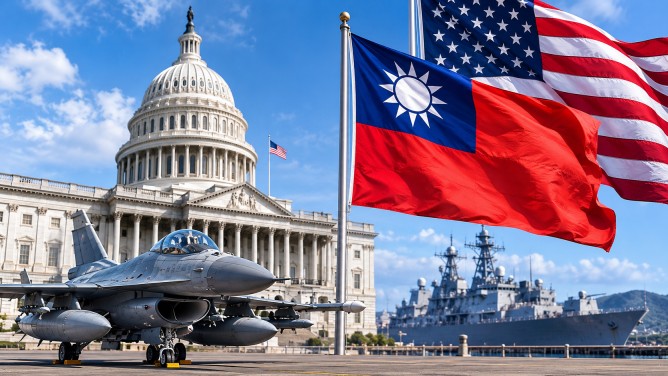
The US House of Representatives has approved a new appropriations bill for the upcoming fiscal year, which notably includes US$500 million in Foreign Military Financing for Taiwan. This legislative measure, passed with a narrow 217-209 vote, is part of a broader initiative that supports Taiwan’s involvement in international organizations and ensures the island receives defense resources. Despite an overall reduction in the discretionary funding to US$47.32 billion, the bill underscores the United States’ commitment to supporting key partners like Taiwan, Israel, Jordan, and Egypt while addressing strategic challenges from China, Iran, and other adversaries.
The bill places significant emphasis on the timely delivery of defense equipment and services to Taiwan, directing the US Secretary of State and the Defense Secretary to prioritize these efforts. Additionally, it earmarks at least US$4 million for the Global Cooperation and Training Framework, an initiative conducted through the American Institute in Taiwan. This framework is designed to strengthen cooperation and enhance training capabilities, further solidifying the US-Taiwan partnership.
Moreover, the legislation includes a stipulation that prevents the allocation of funds for the creation or presentation of maps that inaccurately depict Taiwan’s territorial borders or its governance structure. This provision aims to uphold the integrity of how Taiwan is represented in official documents and materials, reflecting a commitment to supporting Taiwan’s status on the international stage.
Before the appropriations bill can become law, it must also gain approval from the US Senate and subsequently receive the president’s signature. This legislative process highlights the ongoing political discourse surrounding military and strategic support for international allies, particularly in regions experiencing heightened geopolitical tensions.