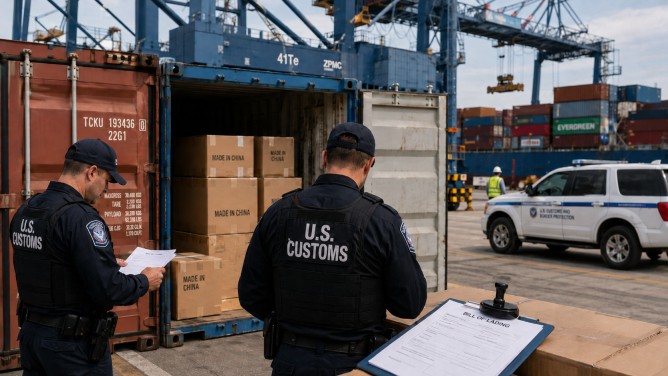
The United States has leveled accusations against 38 nations and the European Union, claiming they are part of a clandestine network that facilitates the entry of Chinese goods into the US market, circumventing hefty tariffs. This alleged “shadow transshipment network” is said to enable Chinese products, subject to high tariffs, to pass through these countries before reaching the US. A report titled “The Great Transshipment Scam” estimates the potential value of this activity at approximately $60 billion, underscoring significant US tariff revenue losses as a result of this practice.
Nations and regions implicated in this network span a wide geographical area, including India, Canada, the EU, Israel, Japan, Mexico, South Korea, Taiwan, Brazil, Indonesia, Malaysia, Thailand, Turkey, Vietnam, Argentina, Azerbaijan, Bangladesh, Cambodia, Chile, Colombia, Costa Rica, the Dominican Republic, Georgia, Jordan, Kazakhstan, Kenya, Laos, Morocco, Myanmar, Oman, Panama, Peru, the Philippines, Singapore, Sri Lanka, Switzerland, the UAE, and Uzbekistan. This extensive list highlights the alleged global scale of the transshipment operations.
The report claims that in the year 2025, around $67 billion worth of goods destined for the US were rerouted from China through significant transit points like Mexico, India, and Vietnam. This maneuver is purported to have led to an estimated $28 billion loss in US tariff revenues. The document specifically points to the Pune-Gujarat-Chennai corridor in India as a major beneficiary of Chinese product transshipments, such as electric pumps and compressors, which, while bolstering local businesses, have increased competitive pressures on American manufacturers.
In response to these findings, the US is considering a series of measures aimed at counteracting this alleged tariff evasion. Proposed actions include implementing stricter inspections and interdiction procedures, imposing additional tariffs, and possibly applying sanctions. Moreover, there is the potential for restricting market access to those countries that are found to be facilitating this type of transshipment, signaling a robust stance against what is seen as a circumvention of US trade policies.